

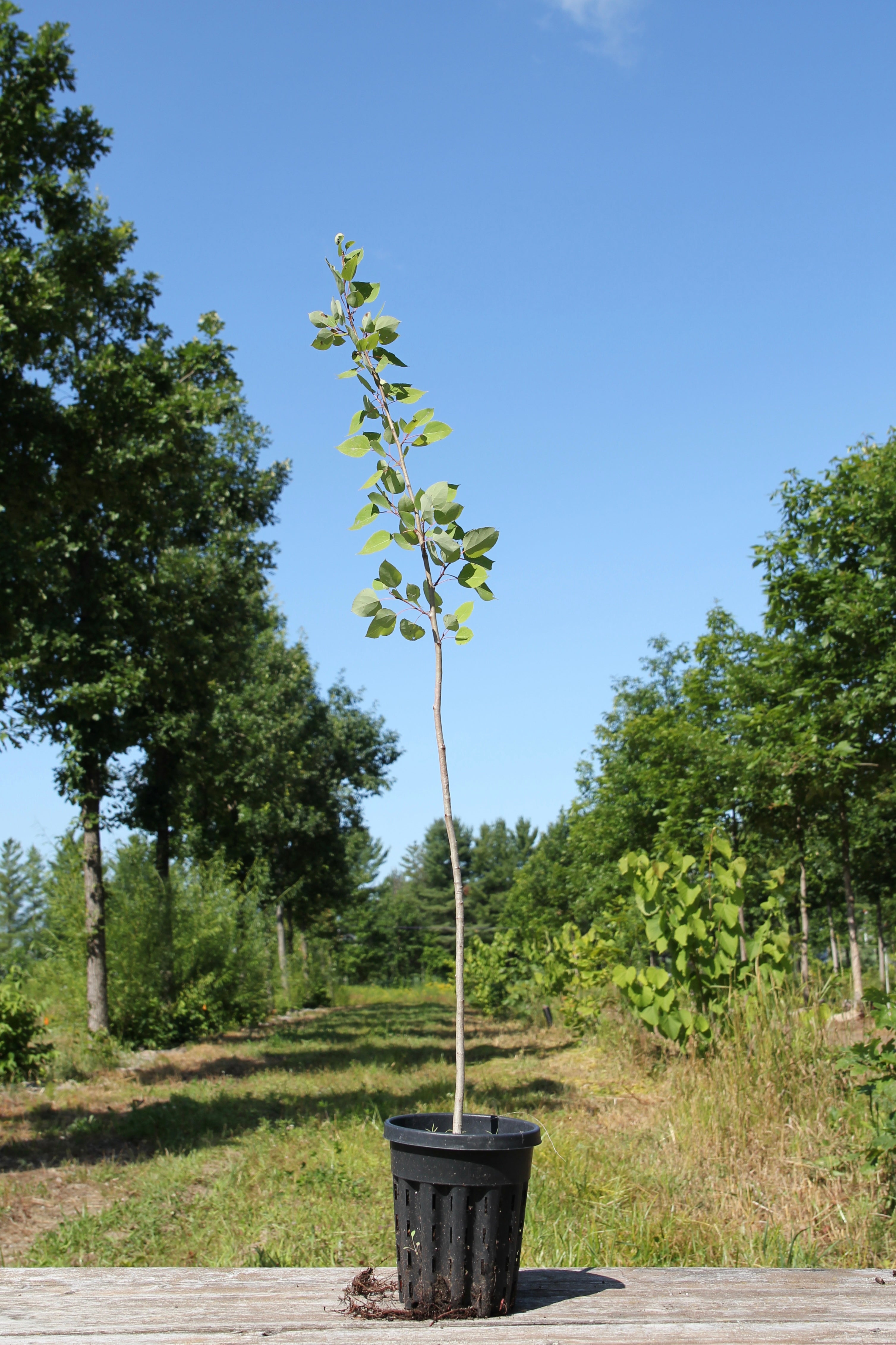
Poplars are rarely found in dense forests, but rather near riverbanks and around wetlands where, like willows, they are appreciated by beavers. Some species (trembling aspen) can grow in poor sandy soils, recommended for truffle cultivation. Poplar wood is often used for making furniture, paneling, and various interior products, due to its light appearance and ease of work.
Hardiness Zone : 3
Height : 15 to 30 m
Width : *It is important to note that the dimensions of poplars can vary depending on the species
Growth : Fast
Exposure : Sunny
Appearance : Varies by species; the bark is generally smooth and gray, becoming rougher and more fissured with age. The leaves of the poplar are deciduous and can be oval or triangular, with serrated edges.
Soil : Prefers rich soils such as loam and well-drained clay soils.
Root system : Extensive, often superficial and spreading.
Diseases and insects : Poplars are susceptible to several diseases and insect infestations. Among the most common diseases are cytosporan canker, dothichiza canker, and leaf rust. Harmful insects include the poplar borer, poplar leaf rollers, and scale insects.
To learn more about the different truffle species in symbiosis, click here.
The trees have a maximum height of about 3 feet; they are young trees.
The price indicated includes a TRIO of trees.
